Usa River, Arusha · Tanzania
+255 652 135 520
info@naratanzaniasafaris.co.tz
LOGONaraTanzania Safaris
Mega feature — Land Cruiser, Ndutu plains — 800×1000
Handmade journeys
LOGONaraTanzania Safaris
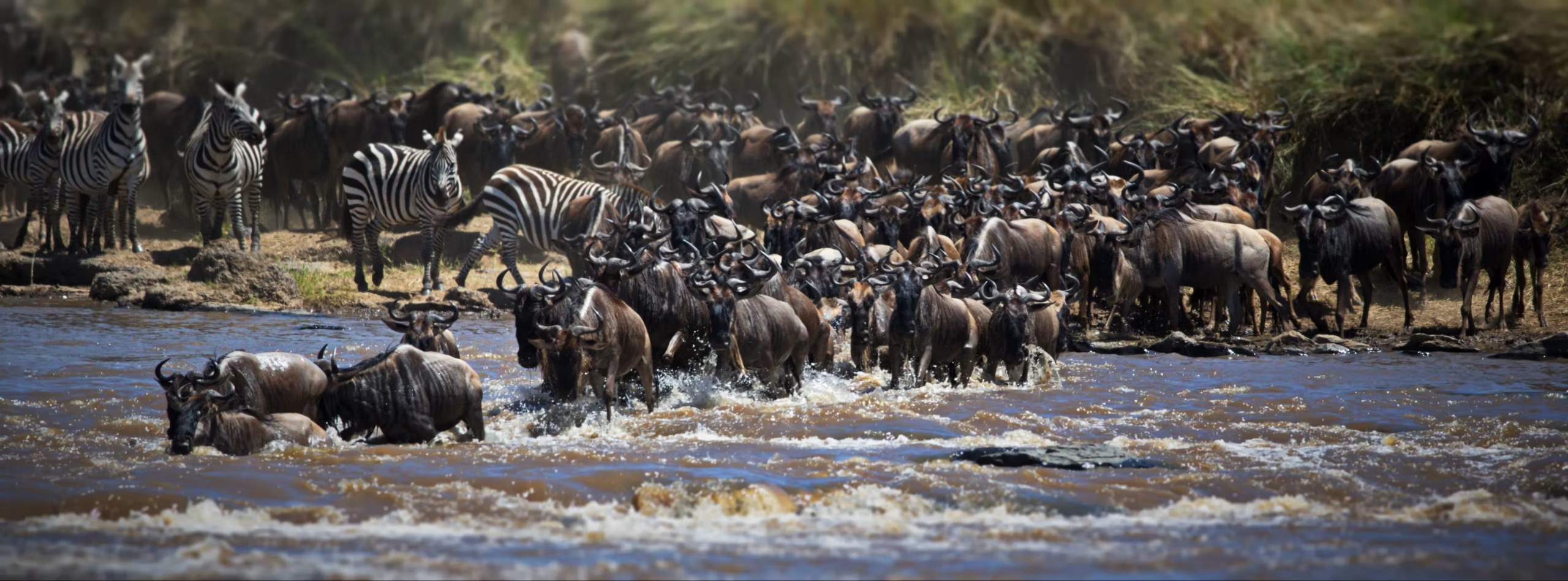
Great Migration hero - Mara crossing - 2400x1500
The Experience
1.5 million wildebeest on a year-round march across the Serengeti-Mara ecosystem — the greatest wildlife spectacle on earth, and how to be in the right place to see it.
The spectacle
The largest movement of land animals on earth — a permanent cycle, always moving, always somewhere.
The Great Migration is the largest movement of land animals on the planet — a continuous, year-round journey of roughly 1.5 million wildebeest, several hundred thousand zebra, and hundreds of thousands of Thomson's and Grant's gazelle, moving in a great clockwise loop through the Serengeti-Mara ecosystem in search of fresh grazing and water. It is not a single event with a start and a finish; it is a permanent cycle, driven by the rains, that has turned across these plains for over a million years.
The most important thing to understand about the migration is that it is always happening, and always somewhere. The herds are never absent from the ecosystem — but where they are changes month by month, and that is what determines when and where you should travel. There is no single "migration season." Instead there are distinct phases — calving, the western trek, the northern river crossings, the return south — each spectacular in its own way, each in a different part of the Serengeti. Planning a migration safari means matching the timing of your trip to the phase you most want to see.
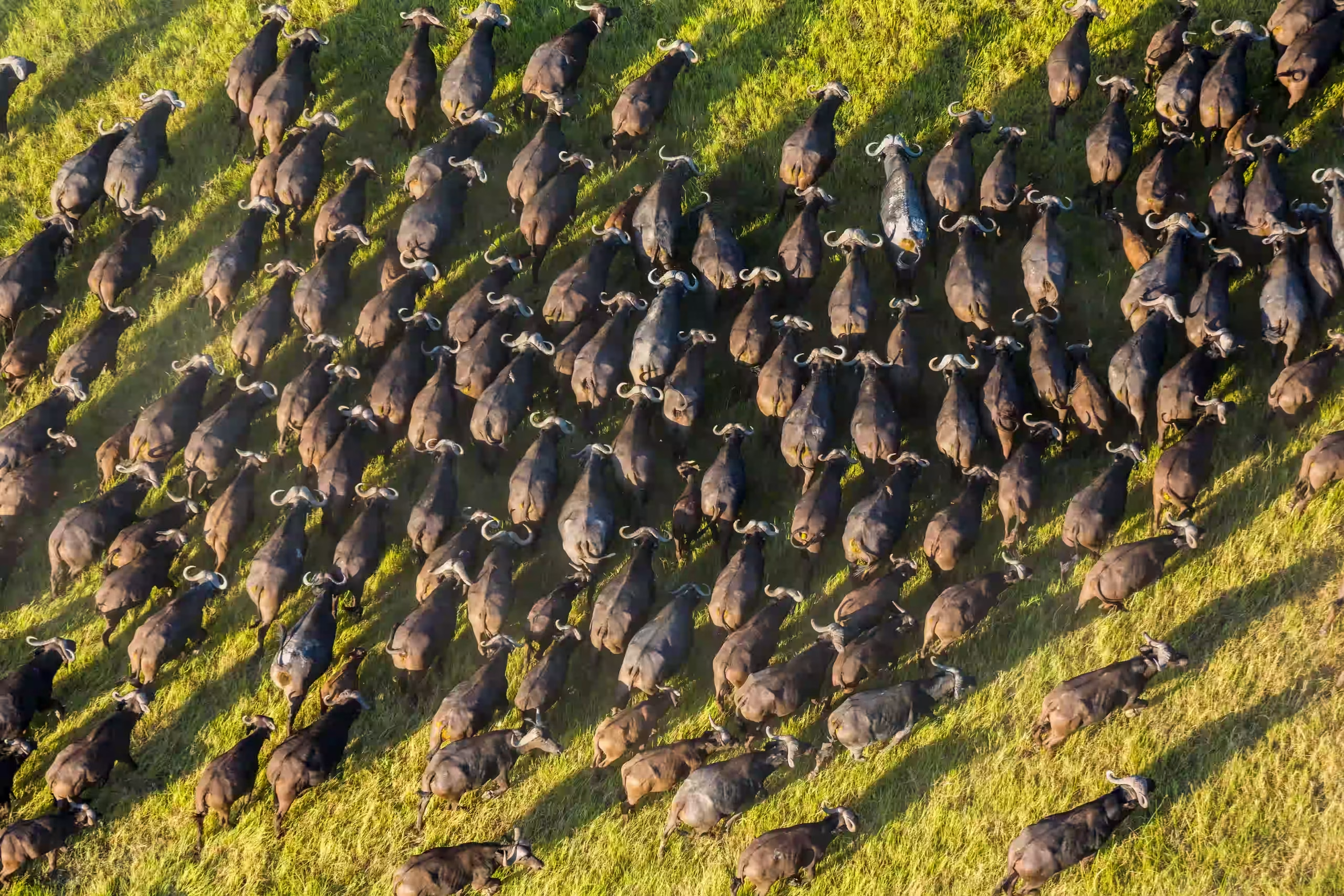
Migration band - marching column - 2400x1350
The herds are never absent from the Serengeti — but where they are changes month by month.
The timing
There is no single migration season — only phases, each in a different part of the Serengeti. Here is where the herds are through the year, so you can match your safari to what you most want to see.
Movements shift year to year with the rains — this is the typical pattern, not a fixed schedule.
The drama
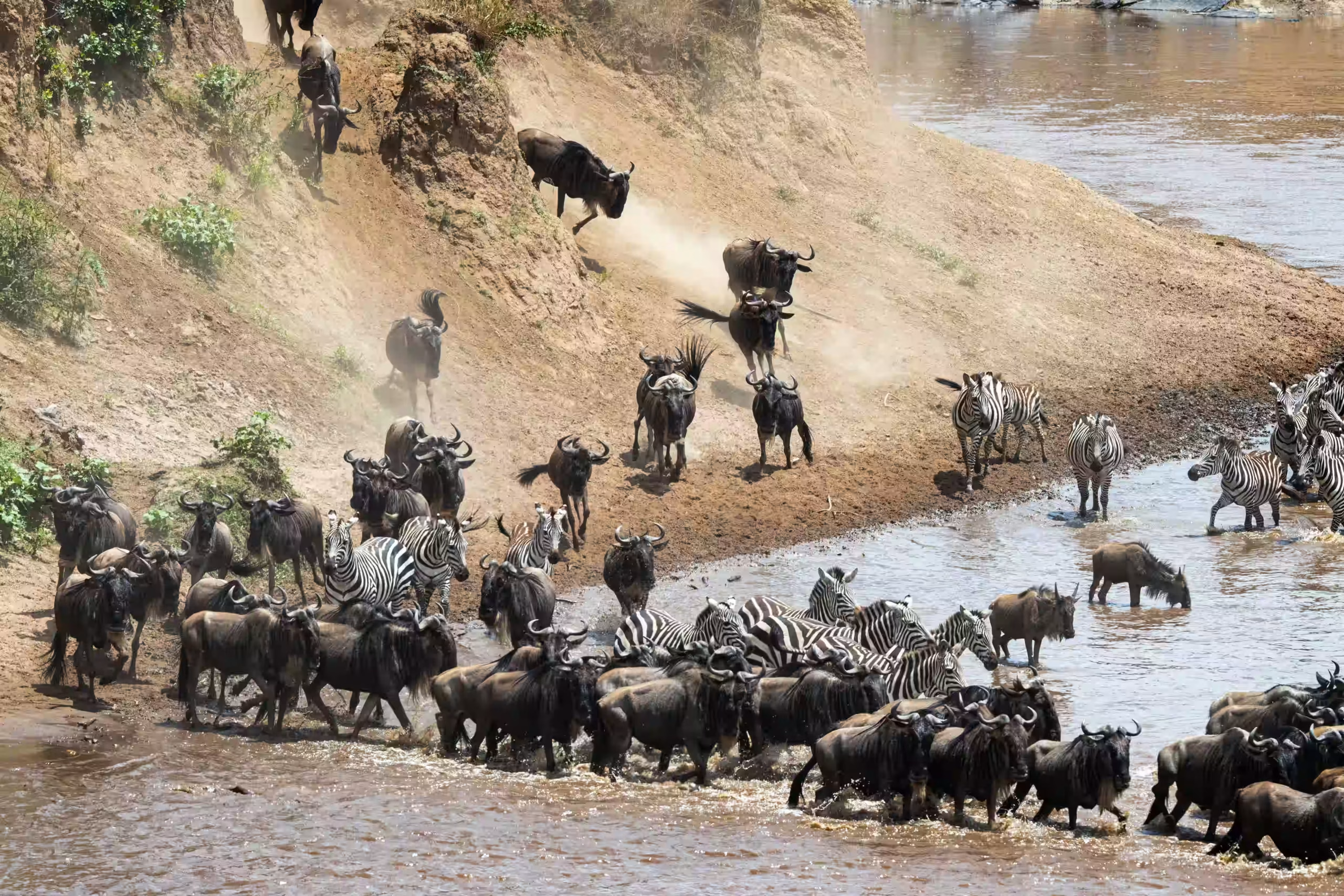
If the migration has a single defining image, it is the river crossing: thousands of wildebeest massed on a riverbank, hesitating, building, until one animal plunges in and the whole herd follows in a churning torrent of hooves and water, while giant Nile crocodiles wait below and predators patrol the far bank. It is one of the most dramatic wildlife events on earth, and for many travellers it is the whole reason to come.
The crossings happen mainly on two rivers. The Grumeti River, in the Western Corridor, sees the year's first crossings around May and June — smaller and less predictable, but far less crowded. The main event is the Mara River, in the northern Serengeti and across the border in Kenya's Maasai Mara, from around July to October. Here the herds cross and re-cross repeatedly through the season, driven by grazing and rain, and a single stretch of river can see multiple crossings in a matter of days.
The crucial thing to know is that crossings cannot be scheduled. The animals cross when they are ready — it may be early morning or late afternoon, and a herd can wait on the bank for hours or days before committing. Seeing a crossing takes time in the right place and a measure of luck. This is why serious migration operators base guests in the north for several nights during crossing season, rather than passing through, and why patience at the river is rewarded.
Where to be
For calving and the best predator action, base yourself on the southern Serengeti plains around Ndutu, or in the Ngorongoro Conservation Area. This is where the herds gather and give birth, and where the cats follow.
For the marching columns, the rut and the first Grumeti crossings, the Western Corridor is the place — and it is far quieter than the northern crossing season.
For the great river crossings, base in the far north around Kogatende and the Mara River. This is peak season; book well ahead, and stay several nights to maximise your chances.
Because no fixed lodge sees the migration all year, the best way to follow it is a mobile tented camp that relocates with the herds through the seasons — southern plains in calving season, the north for the crossings.
Planning
A migration safari can be built in several ways, and the right approach depends on when you travel and how you like to explore. The two big decisions are how you get around, and where you stay.
Flying versus driving. The Serengeti is vast, and the migration's phases play out hundreds of kilometres apart. During crossing season the northern Serengeti is a long drive from the central airstrips, so most travellers fly in by light aircraft to an airstrip near the herds — Kogatende for the northern crossings, Ndutu for calving season — saving a full day of driving each way. An overland approach through the northern circuit (Tarangire, Ngorongoro, then the Serengeti) is rewarding and takes in several parks, but for reaching a specific migration phase quickly, flying wins.
Where to stay. Fixed lodges are comfortable and well-appointed, but a single lodge only has good migration access for part of the year. To follow the herds properly, many operators use mobile tented camps — semi-permanent camps that pack up and relocate two or three times a year to stay near the migration, putting you within a short drive of the action whatever the season. For crossing season in particular, a camp in the north is far better placed than a lodge in the central Serengeti.
How long you need. Allow at least three nights near the migration to give yourself a real chance of the phase you've come for — especially the crossings, which take patience. Many travellers combine three or four migration-focused nights with time in the Ngorongoro Crater and Tarangire, for a week-long northern safari that pairs the migration with the wider circuit.
In pictures
Gallery - wildebeest river crossing - 1400x1600
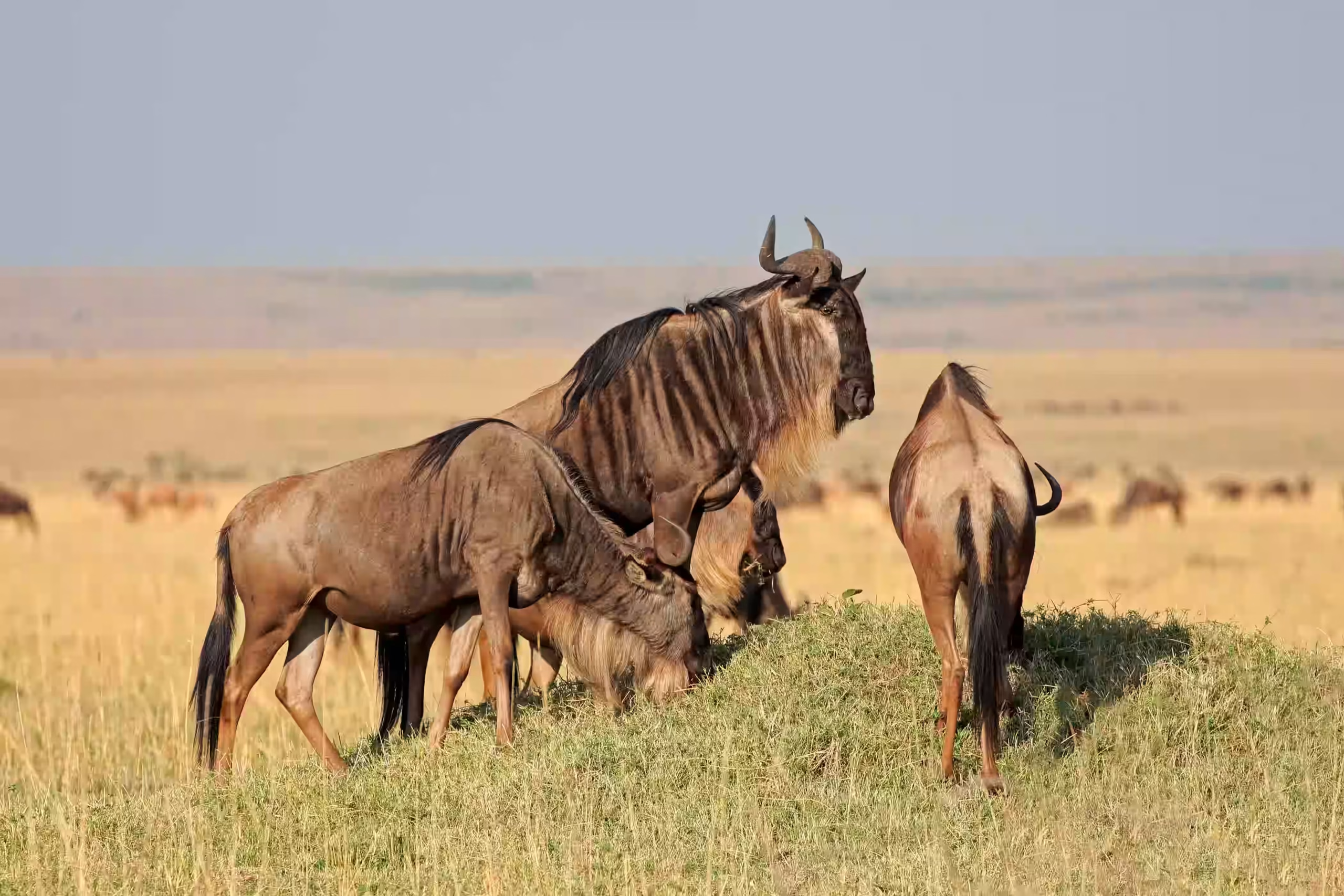
Gallery - wildebeest calf, calving season - 900x700
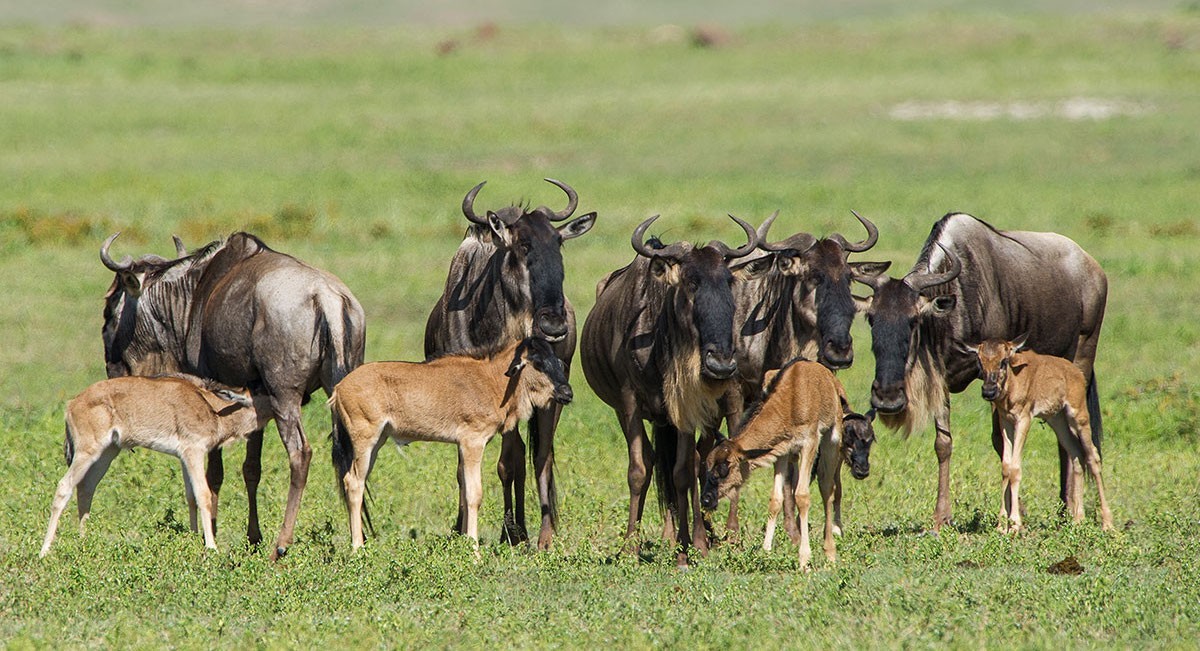
Gallery - marching column of wildebeest - 900x700
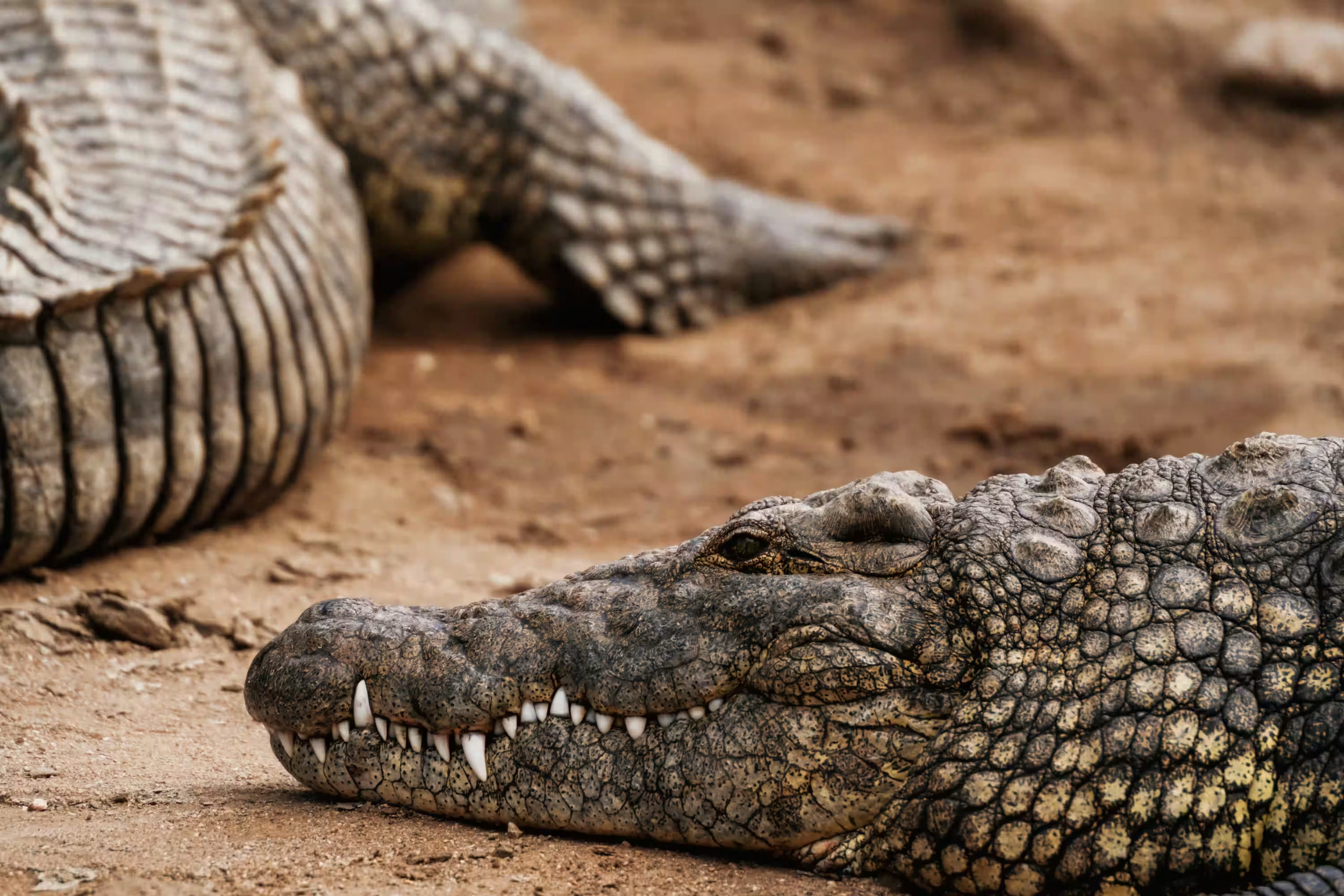
Gallery - crocodile at the river crossing - 900x700
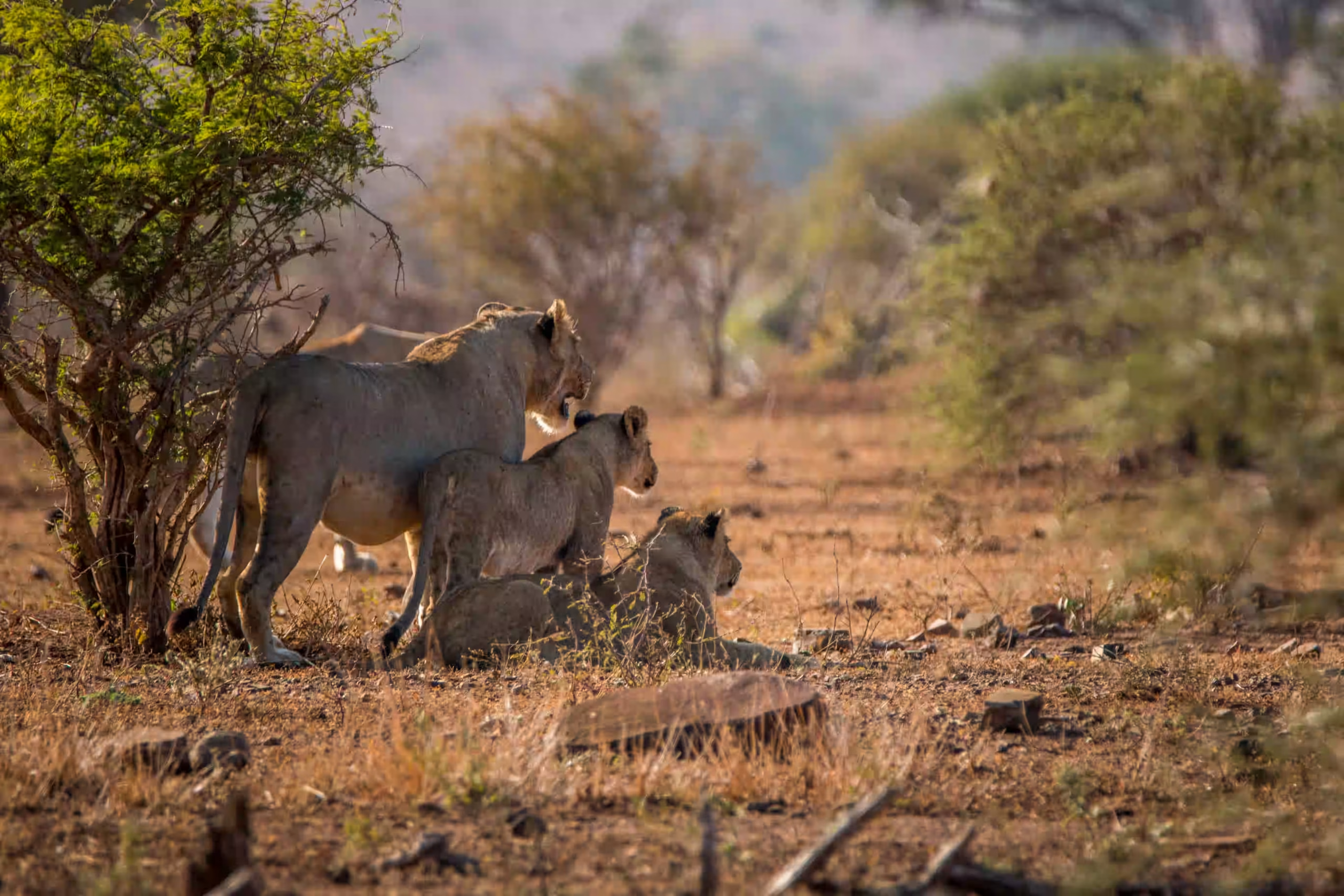
Gallery - lioness watching the herds - 900x700Is it for you?
The migration delivers the classic African safari at its grandest — vast herds, dramatic predators, the open plains. Combined with the Ngorongoro Crater, it is an unforgettable introduction.
From the churning drama of a river crossing to the tender scenes of calving season, the migration offers some of the finest wildlife photography on earth. The northern crossings and the southern calving grounds are the prime windows.
Even those who have been on safari before find the scale of the migration astonishing. Timing a trip to a specific phase — the crossings, the calving — gives a familiar safari a new focus.
The spectacle and abundance of the migration captivate children, and the easy game viewing of the open plains means there is always something to see. Calving season, with its many newborns, is especially rewarding for families.
Questions
Tell us when you can travel and a guide in Arusha will build you a route to the right place at the right time - within 24 hours, from a person, not a brochure.