Usa River, Arusha · Tanzania
+255 652 135 520
info@naratanzaniasafaris.co.tz

LOGONaraTanzania Safaris
Mega feature — Land Cruiser, Ndutu plains — 800×1000
Handmade journeys
LOGONaraTanzania Safaris
Walking Safaris hero - 2400x1500
The Experience
Leave the vehicle behind and step into the wild on foot - the oldest, and most intimate, way to experience the African bush.
The experience
A walking safari is the oldest way to experience Africa, and for many the most profound. Stepping out of the vehicle and into the bush on foot changes everything: the scale shifts, the senses sharpen, and a landscape that flashes past a window becomes a world of tracks, scents, sounds and small details. Led by an armed, expert guide, a walking safari is not about chasing big game but about reading the bush - the story in a set of tracks, the medicinal use of a plant, the alarm call of a bird, the architecture of a termite mound.
This is a slower, quieter, more immersive kind of safari, and it offers a connection to the wilderness that no game drive can match. There is a particular thrill to being on foot in wild country, aware that you are a part of the ecosystem rather than an observer behind glass. Encounters with animals, when they come, are felt in a way that is impossible from a vehicle. A walking safari is less about the checklist and more about presence - the feeling of the wild, up close and on its own terms.
Walking Safaris band - 2400x1350
Leave the vehicle behind and step into the wild on foot - the oldest, and most intimate, way to experience the African bush.
On foot
A walking safari is a different rhythm from a game drive. Here is what it involves, and what makes it special.
The safety
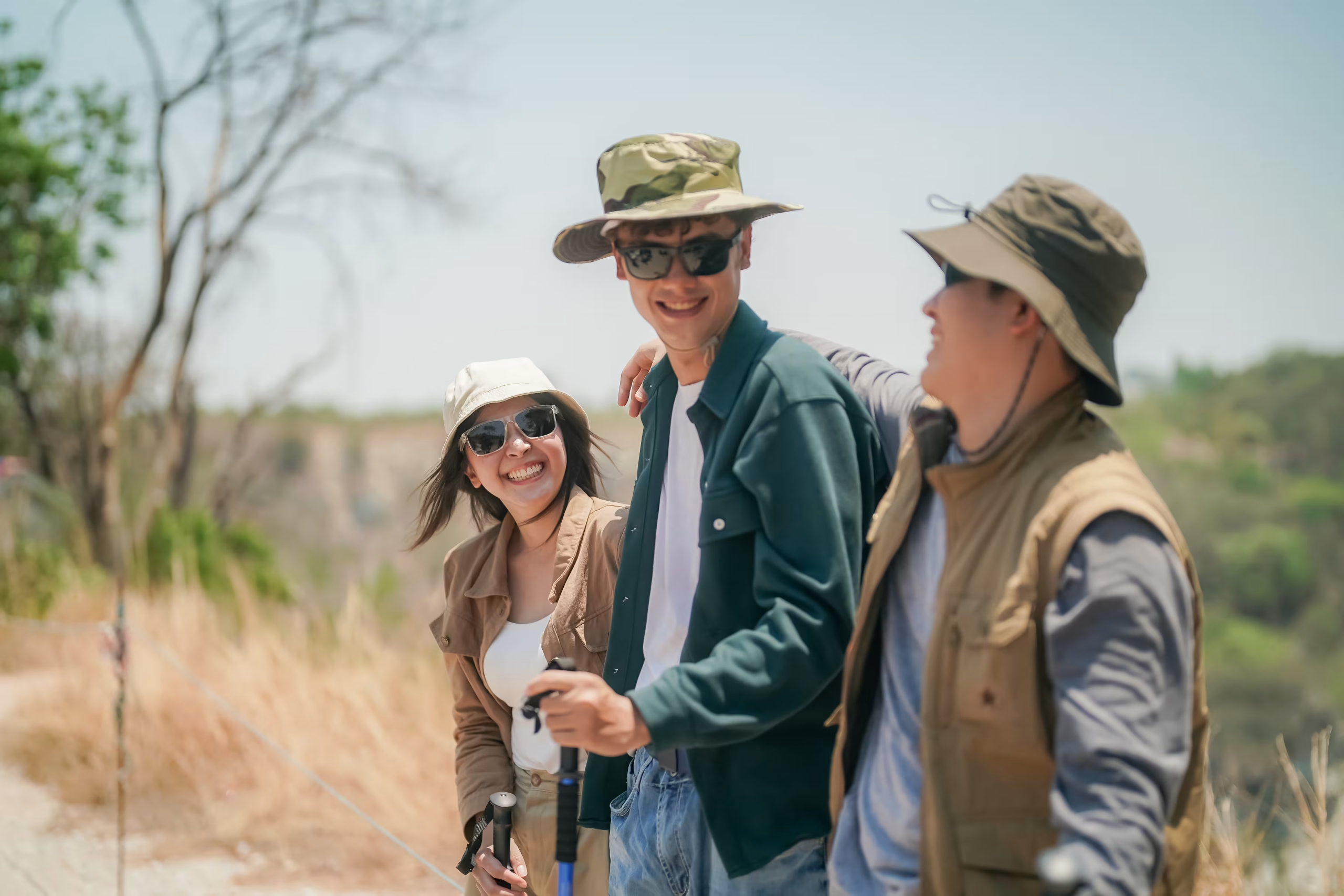
A walking safari is carefully structured around safety and expertise. Every walk is led by an armed, professionally qualified guide, frequently accompanied by an armed national park ranger, and begins with a briefing on bush conduct - walking in single file, staying quiet, and following the guide's instructions without question. Guides are trained to read animal behaviour and to avoid or safely manage encounters, and the aim is always to observe without disturbing.
Walks are typically done in the cooler hours of early morning or late afternoon, last from one to three hours (though multi-day walking trips exist), and move at a gentle, unhurried pace - this is not a hike but a slow, attentive exploration. The focus is on the details and the experience rather than covering distance or ticking off big game. Because walking is only permitted in certain areas and requires the right guiding, it is offered in specific parks and private concessions rather than everywhere. Where it is available, a walking safari is often the highlight of a trip, and it pairs beautifully with vehicle-based game drives for a fuller experience of the bush.
Where to go
One of the few parks where walking is a core activity - forest, the Momella Lakes and Ngurdoto Crater, with giraffe and colobus, plus canoeing.
The former Selous permits walking safaris across its vast wilderness - a rare chance to explore big-game country on foot, away from crowds.
In Tanzania’s remotest park, guided walks across the floodplains offer wilderness on foot at its most undiluted.
Chimpanzee trekking is walking safari of a special kind - hours on foot through forest to find our closest relatives on Lake Tanganyika.
Planning
A walking safari can be a single activity within a broader trip or, for the committed, the focus of the whole journey. The simplest approach is to include walks within a vehicle-based safari - a morning on foot in a park that permits it, alongside game drives - which gives the best of both: the reach of the vehicle and the intimacy of the walk.
Where it is offered. Because walking requires the right terrain, guiding and permissions, it is available in specific places - Arusha National Park, the southern and western wilderness of Nyerere and Katavi, and, in its own form, the chimpanzee forests of Mahale and Gombe. If walking is important to you, your itinerary should be built around parks that allow it.
Who it is for and fitness. Walking safaris are generally suited to reasonably mobile travellers, though the gentle pace means a high level of fitness is not usually required for shorter walks - the focus is on observation, not exertion. There is often a minimum age, as children are not permitted on walks in big-game areas for safety reasons. Bring neutral-coloured clothing, sturdy closed shoes, a hat and water, and let your guide lead - the reward is the wild bush, experienced as directly as it can be.
In pictures
Is it for you?
For those who have done game drives and want to go deeper, a walking safari offers a more intimate, immersive connection to the bush.
If the small details - tracks, plants, birds, insects - fascinate you as much as the big game, walking is the most rewarding way to experience them.
There is a genuine, primal thrill to being on foot in wild country, aware and alive to your surroundings, that no vehicle can provide.
Reasonably mobile travellers who like to be out in nature, moving gently through the landscape, will find walking safaris deeply satisfying.
Questions
Tell us what you have in mind and a guide in Arusha will build you a route - within 24 hours, from a person, not a brochure.