Nara Tanzania Safaris

Usa River, Arusha · Tanzania +255 652 135 520 info@naratanzaniasafaris.co.tz

NaraTanzania Safaris Plan your safari
Gombe Stream National Park - 2400x1500 Gombe Stream National Park hero - 2400x1500

Gombe Stream National Park

Tanzania's smallest national park, and the most famous — where Jane Goodall began her landmark study of wild chimpanzees on the shore of Lake Tanganyika.

35 km²Smallest park in Tanzania1960Goodall’s study began~100Chimpanzees

01 The place

Gombe Stream, in short.

Gombe Stream National Park is the smallest national park in Tanzania — a narrow strip of forested hills, just 35 square kilometres, running along the shore of Lake Tanganyika in the far west of the country. Despite its size, it is among the most famous protected areas in the world, because it was here, in 1960, that a young Jane Goodall began the study of wild chimpanzees that would transform our understanding of these animals and of ourselves. That research continues today, making Gombe the longest-running study of wild chimpanzees anywhere.

A visit to Gombe is, above all, a pilgrimage to track chimpanzees in the forest where so much about them was first learned. The park's steep valleys and streams — the "gombe" of its name — are draped in forest that tumbles down to the lakeshore, and the chimpanzees range through it as they have always done. To trek through these hills and sit among a community made famous to the world is a moving experience, layered with the history of Goodall's discoveries about tool use, hunting and the complex social lives of our closest relatives.

02 The wildlife

The wildlife.

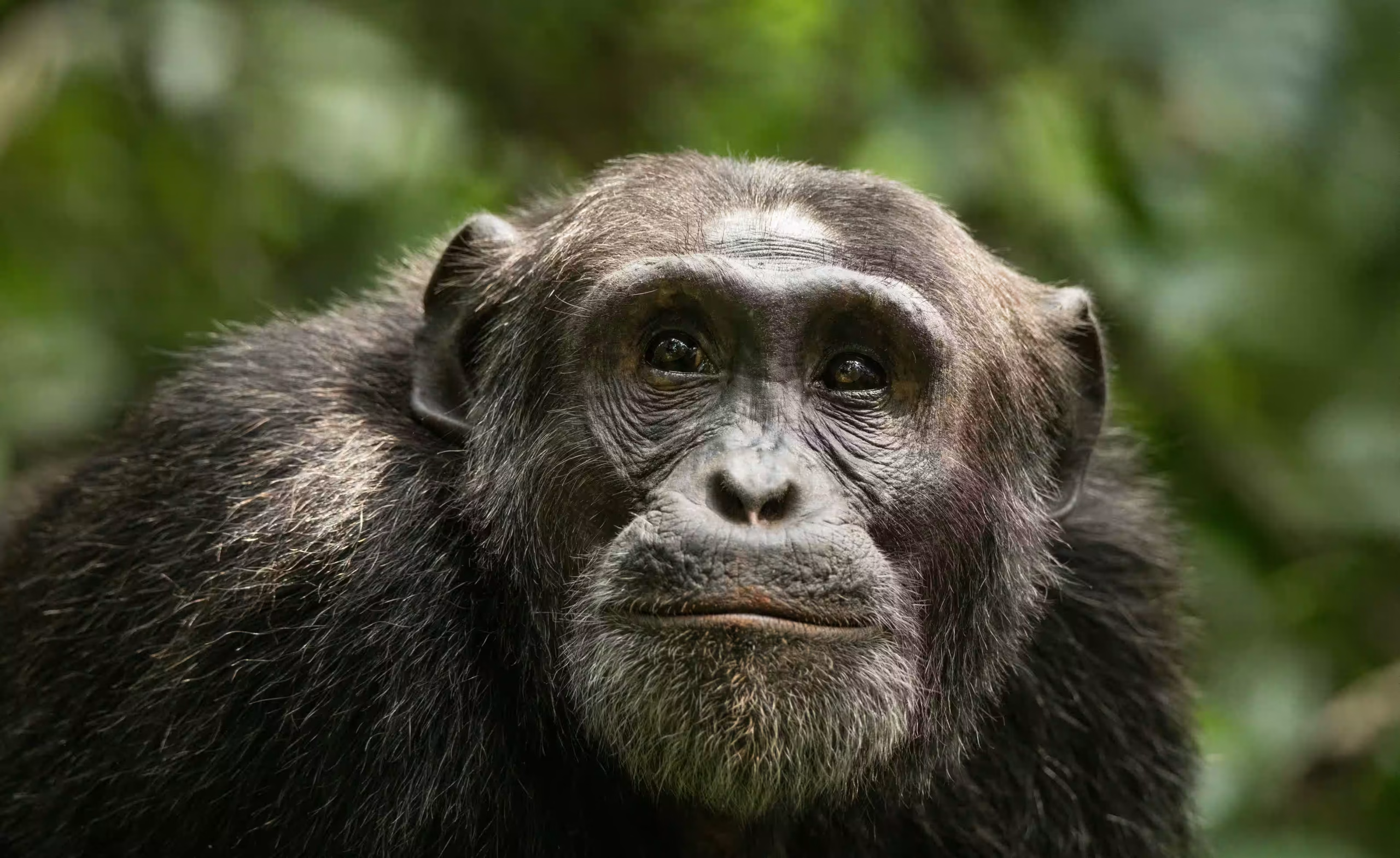
Gombe's chimpanzees are its heart. The park's main community, habituated over decades of continuous study, numbers around a hundred individuals, and trekking to find them — climbing the steep forested valleys with a guide — is the central experience. Because of the long history of research here, the chimpanzees are exceptionally well known as individuals, and the encounter carries a depth of context found nowhere else: these are the descendants of the animals Goodall named and followed.

Beyond the chimpanzees, Gombe's forests hold a rich primate community — red colobus (a favoured prey of the chimpanzees), red-tailed and blue monkeys, vervets and olive baboons, the last also long-studied here. The birdlife is abundant, with over 200 species, and the forest streams and waterfalls add to the park's beauty. And at its feet lies Lake Tanganyika, clear and warm, perfect for swimming and snorkelling among cichlid fish after a morning in the hills. Small as it is, Gombe packs remarkable natural richness and unmatched scientific history into its forested slopes.

03 When to go

The best time to visit.

Gombe is best visited in the dry season, from roughly May to October, when the forest trails are firmer and easier to climb, the chimpanzees are generally easier to locate, and conditions on the lake are calm and clear. These months offer the most comfortable and reliable chimpanzee trekking, and are the recommended time to visit.

The wet season, November to April, brings rain that makes the steep forest trails slippery and the trekking more demanding, though the forest is lush and the waterfalls full, and the chimpanzees can sometimes be found closer to the lower slopes. Birding is excellent in the green months. As with all chimpanzee destinations, sightings are never guaranteed, but Gombe's small size and habituated community give high success rates, particularly in the dry season.

A wild chimpanzee in the forest at Gombe - 2400x1350 Gombe Stream band - 2400x1350

Tanzania's smallest national park, and the most famous — where Jane Goodall began her landmark study of wild chimpanzees on the shore of Lake Tanganyika.

04 The regions

Where to go, and when.

Gombe is small and linear, and its experience is shaped by the steep land between lake and ridge. The lakeshore is where visitors arrive and stay, a narrow beach strip along Lake Tanganyika with clear water for swimming and snorkelling. Behind it, forested valleys and streams climb steeply — this is chimpanzee country, and where the trekking takes place, following the same valleys Goodall walked. Higher up, the rift escarpment and ridge offer sweeping views over the lake toward the Congo. Threading through it all are the park's streams and waterfalls, including the Kakombe Falls, a beautiful goal for a forest walk between chimpanzee treks.
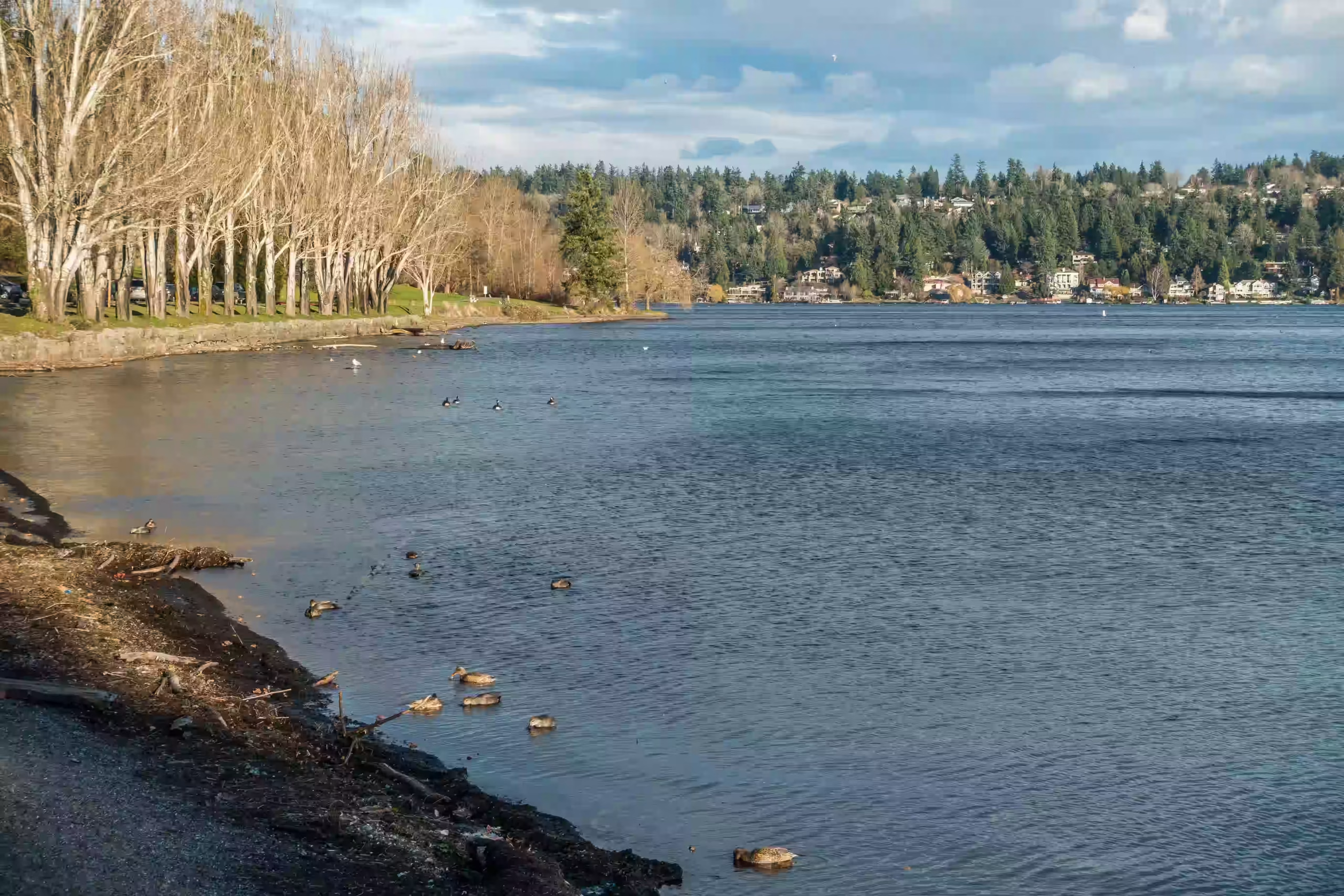
The Lakeshore - Gombe Stream National Park - 1200x900Region - The Lakeshore - 1200x900

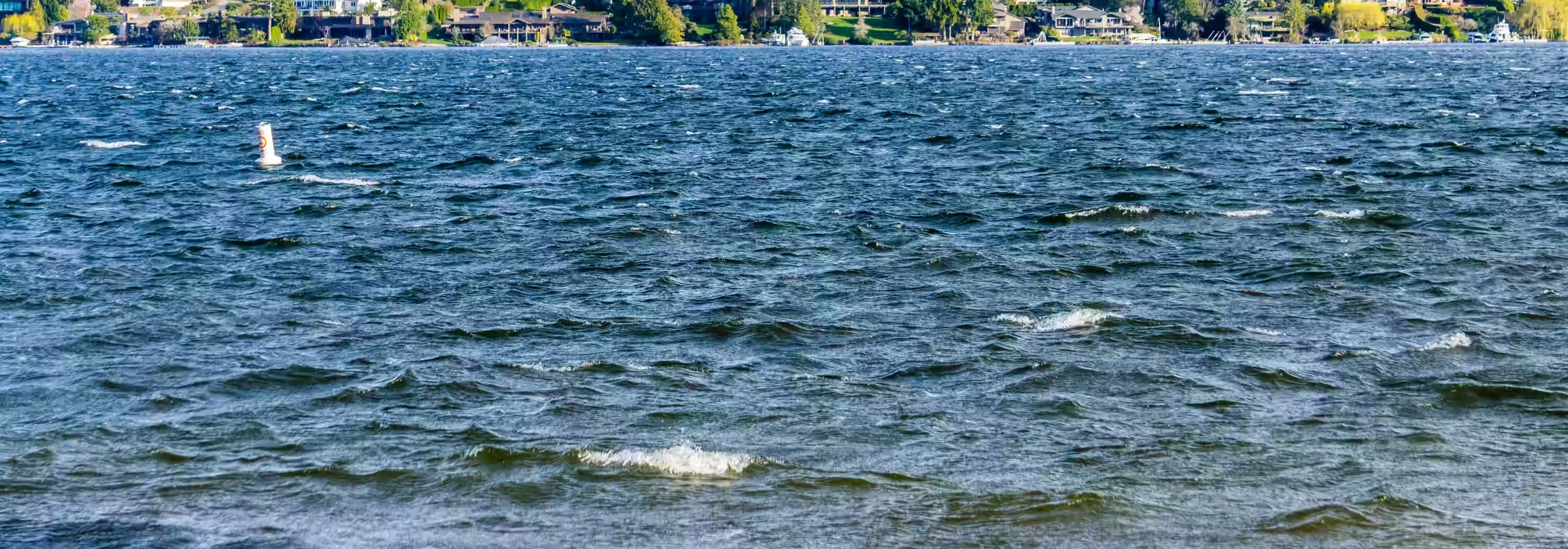
The Lakeshore

A narrow beach strip on Lake Tanganyika where visitors arrive and stay, with clear water for swimming.

The Forested Valleys - Gombe Stream National Park - 1200x900Region - The Forested Valleys - 1200x900

The Forested Valleys

Steep chimpanzee country where the trekking follows the same valleys Jane Goodall walked.

The Rift Ridge - Gombe Stream National Park - 1200x900Region - The Rift Ridge - 1200x900

The Rift Ridge

The escarpment above the lake, with sweeping views toward the Congo across the water.

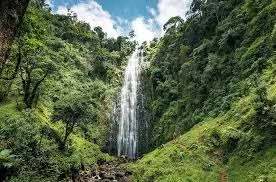
Kakombe Falls - Gombe Stream National Park - 1200x900Region - Kakombe Falls - 1200x900

Kakombe Falls

A beautiful forest waterfall, a rewarding goal for a walk between chimpanzee treks.

05 Getting there

How to get there.

Gombe is reached via the lakeside town of Kigoma, the main hub of far-western Tanzania. Kigoma is served by scheduled flights from Dar es Salaam and Arusha, and from there the park is reached by boat along the shore of Lake Tanganyika — a motorboat transfer of a couple of hours, or longer by local lake-taxi. There are no roads into Gombe and no vehicle access; as at Mahale, movement within the park is entirely on foot and by boat. Its relative accessibility via Kigoma makes Gombe somewhat easier to reach than Mahale, and the two are sometimes combined for travellers focused on chimpanzees and Lake Tanganyika.

07 The route

A sample Gombe Stream itinerary.

Day 01

Fly to Kigoma, boat to Gombe

Fly to Kigoma and transfer by boat along Lake Tanganyika to Gombe, arriving at the forested lakeshore where Jane Goodall's study began.

Day 02

Chimpanzee trekking

An early trek into the steep forest valleys with a guide to find the habituated chimpanzee community, spending a treasured hour among the descendants of Goodall's chimpanzees.

Day 03

Forest walk & the lake

A walk to the Kakombe Falls and time with the park's other primates and birds, plus swimming and snorkelling in Lake Tanganyika's clear water.

Day 04

Return via Kigoma

Boat back to Kigoma and fly onward, or continue to Mahale for more time with chimpanzees on the lake.

08 Questions

Gombe Stream safari questions.

Gombe is famous as the site of Jane Goodall's landmark study of wild chimpanzees, begun in 1960 and now the longest-running study of wild chimpanzees anywhere. It is Tanzania's smallest national park, and a visit is essentially a pilgrimage to trek chimpanzees in the forest where so much about them was first learned.
The dry season (roughly May–October) is best, when forest trails are firmer, chimpanzees are easier to locate and the lake is calm. The wet season (November–April) makes the steep trails slippery and trekking more demanding, though the forest is lush and birding excellent.
Gombe is reached via the town of Kigoma, served by flights from Dar es Salaam and Arusha, then by boat along Lake Tanganyika — a couple of hours by motorboat. There are no roads into the park; movement is on foot and by boat. Its accessibility via Kigoma makes it somewhat easier to reach than Mahale.
Both offer superb wild chimpanzee trekking on Lake Tanganyika. Gombe is smaller, more famous for its Goodall history, and slightly easier to reach via Kigoma; Mahale is larger, more remote and more dramatic in setting. Travellers focused on chimpanzees sometimes visit both.
Gombe's habituated main community numbers around a hundred individuals — the descendants of the chimpanzees Jane Goodall named and studied from 1960. Because of the long research history, they are exceptionally well known as individuals, giving the encounter unusual depth.
Two to three days is typical, allowing one or more chimpanzee treks plus a forest walk and time on the lake. Given the journey via Kigoma, most travellers stay at least two nights, sometimes combining Gombe with Mahale for a chimpanzee-focused western safari.

Ready to see Gombe Stream?

Tell us how you want to travel and a guide in Arusha will build you a route - within 24 hours, from a person, not a brochure.

Loading itinerary…
Saved Trips